
Just outside London, Marble Hill House has long been a goal of mine, and I finally visited on my last day in England in September 2022. It was built 1724-29 for Henrietta Howard, Countess of Suffolk, a woman admired for her wit and understanding as well as her charm and beauty. Below, the South Front, facing the Thames across the garden.
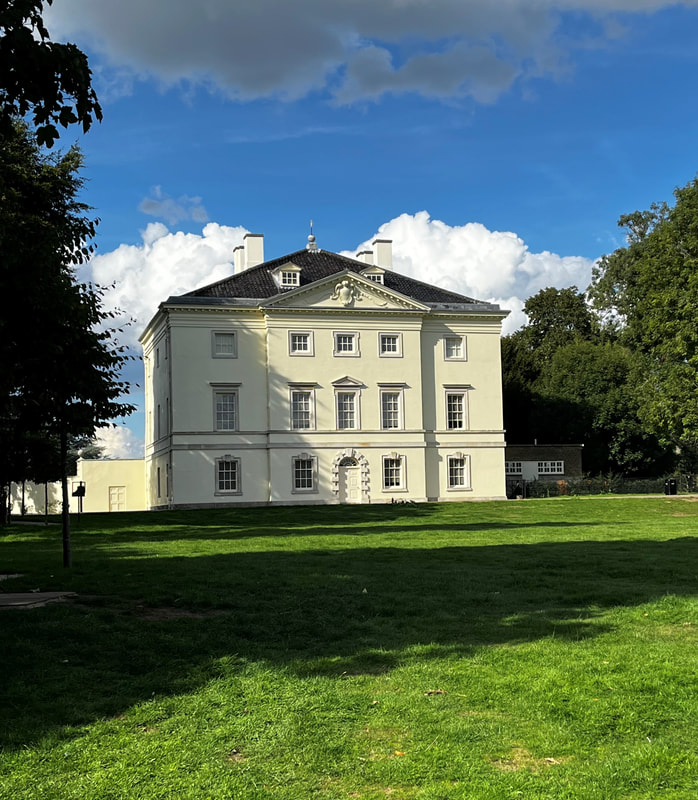
The house in Twickenham is now cared for by English Heritage and its grounds, sloping down to the Thames, are partially dedicated to public parkland and playing grounds. A seven-year renovation project completed in 2022, with the help of the Heritage Lottery Fund.
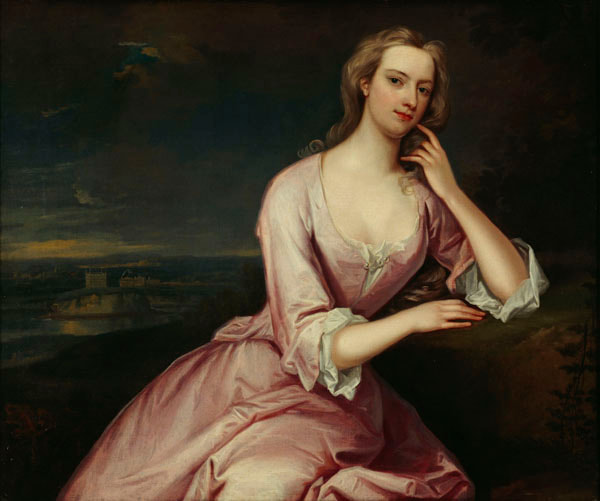
Below, portrait of Henrietta Hobart Howard, (1689-1767), who built Marble Hill House reportedly with the funds she received as a settlement after her long liaison with George, Prince of Wales, later King George II. Orphaned at age 12, she was the ward of Henry Howard, 5th Earl of Suffolk. She married his youngest son Charles in 1706, who mistreated her, probably causing her partial deafness by the time she reached the age of thirty. Their only child, Henry, eventually became the 10th Earl of Suffolk, succeeding his father.
While Henrietta was the mistress of George, Prince of Wales, she was also Lady of the Bedchamber to his wife, Caroline, a relationship that varied from friendship to aversion. She was painted by Charles Jervas in 1724, below.
Below, portrait of Henrietta Hobart Howard, (1689-1767), who built Marble Hill House reportedly with the funds she received as a settlement after her long liaison with George, Prince of Wales, later King George II. Orphaned at age 12, she was the ward of Henry Howard, 5th Earl of Suffolk. She married his youngest son Charles in 1706, who mistreated her, probably causing her partial deafness by the time she reached the age of thirty. Their only child, Henry, eventually became the 10th Earl of Suffolk, succeeding his father.
While Henrietta was the mistress of George, Prince of Wales, she was also Lady of the Bedchamber to his wife, Caroline, a relationship that varied from friendship to aversion. She was painted by Charles Jervas in 1724, below.

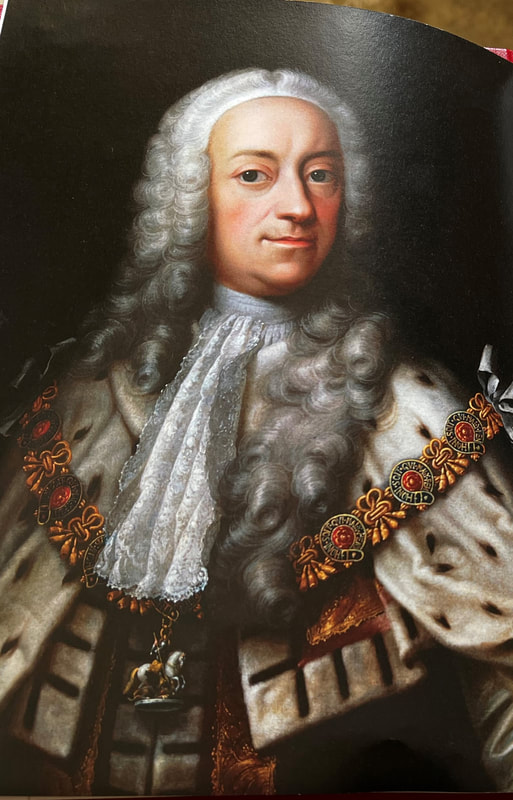
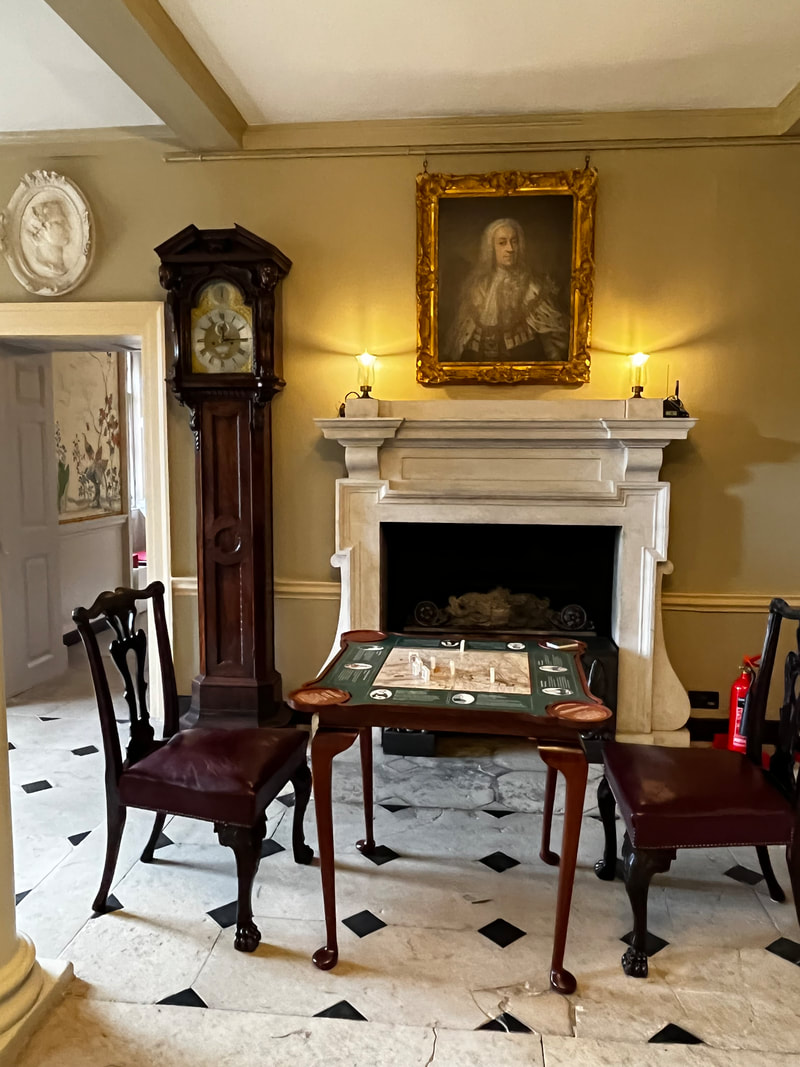
Above, the portrait of George II (1683-1769) attributed to Swiss artist Barthelemy Du Pan now hangs in Marble Hill House though it never belonged to Henrietta Howard. Right, the painting is above the fireplace beyond the game table on the ground floor.
Though she and her husband separated, they did not divorce; therefore, when he inherited his title as the 9th Earl of Suffolk in 1731, she became Countess of Suffolk. After her first husband died in 1733, Henrietta lived at Marble Hill where she entertained many intellectual leaders of the realm, including Alexander Pope (1688-1744); Jonathan Swift (1667-1745); Richard Temple, 1st Viscount Cobham (1675-1744), builder of Stowe in Buckinghamshire; and Horace Walpole (1717-1797), her neighbor at Strawberry Hill, and others.
In 1735, she married George Berkeley (?1693-1746), youngest son of the 2nd Earl of Berkeley, who served in the House of Commons and as governor of London's St. Katherine's Hospital. Their eleven years of marriage were happier, a big improvement over her first marital experience. They raised her brother John's children at Marble Hill. In 1763, her granddaughter Henrietta Hotham (1753-1816) came to live with her.
Though she and her husband separated, they did not divorce; therefore, when he inherited his title as the 9th Earl of Suffolk in 1731, she became Countess of Suffolk. After her first husband died in 1733, Henrietta lived at Marble Hill where she entertained many intellectual leaders of the realm, including Alexander Pope (1688-1744); Jonathan Swift (1667-1745); Richard Temple, 1st Viscount Cobham (1675-1744), builder of Stowe in Buckinghamshire; and Horace Walpole (1717-1797), her neighbor at Strawberry Hill, and others.
In 1735, she married George Berkeley (?1693-1746), youngest son of the 2nd Earl of Berkeley, who served in the House of Commons and as governor of London's St. Katherine's Hospital. Their eleven years of marriage were happier, a big improvement over her first marital experience. They raised her brother John's children at Marble Hill. In 1763, her granddaughter Henrietta Hotham (1753-1816) came to live with her.
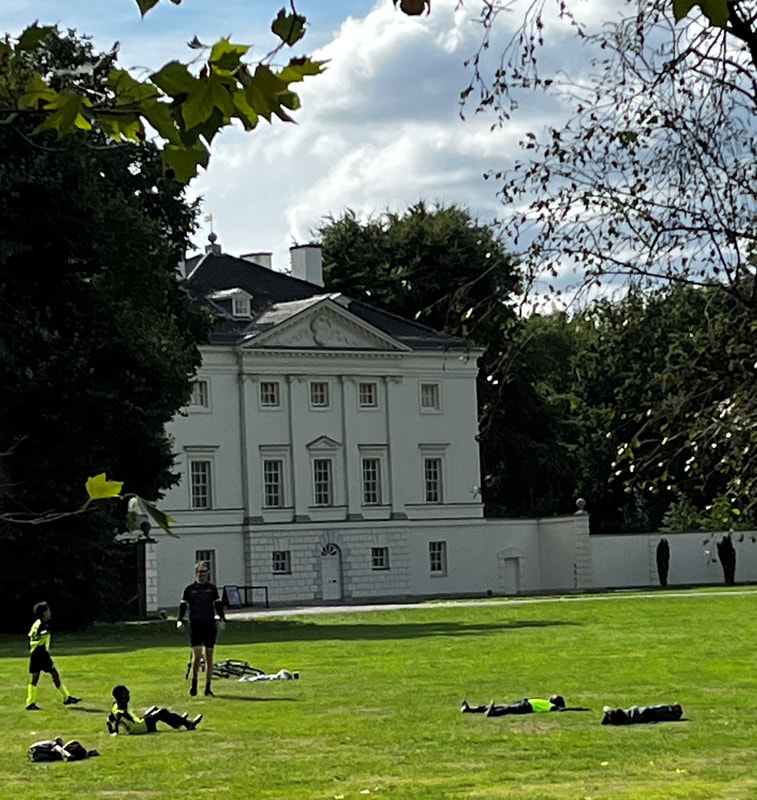
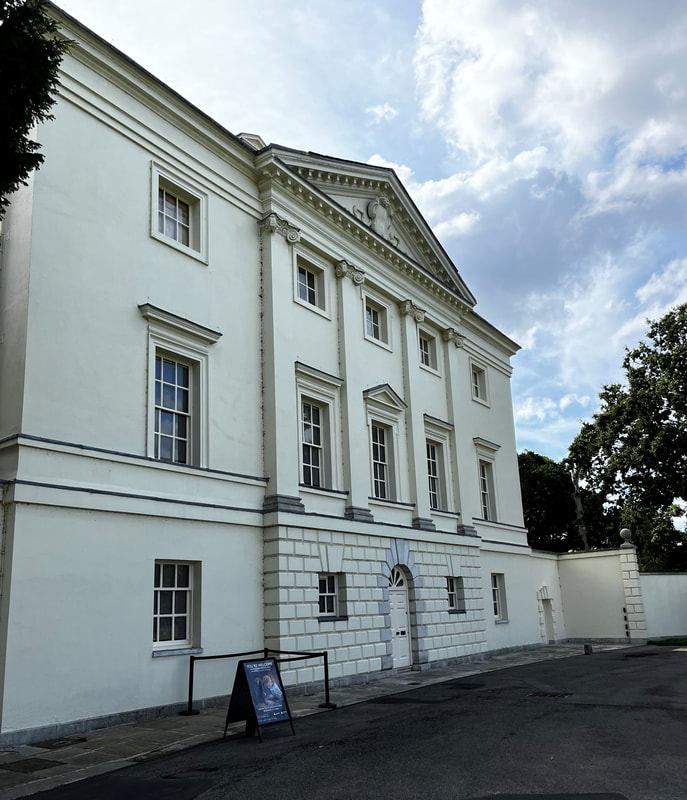
Below, two views of the north facade of the house, facing the playing fields and the town.

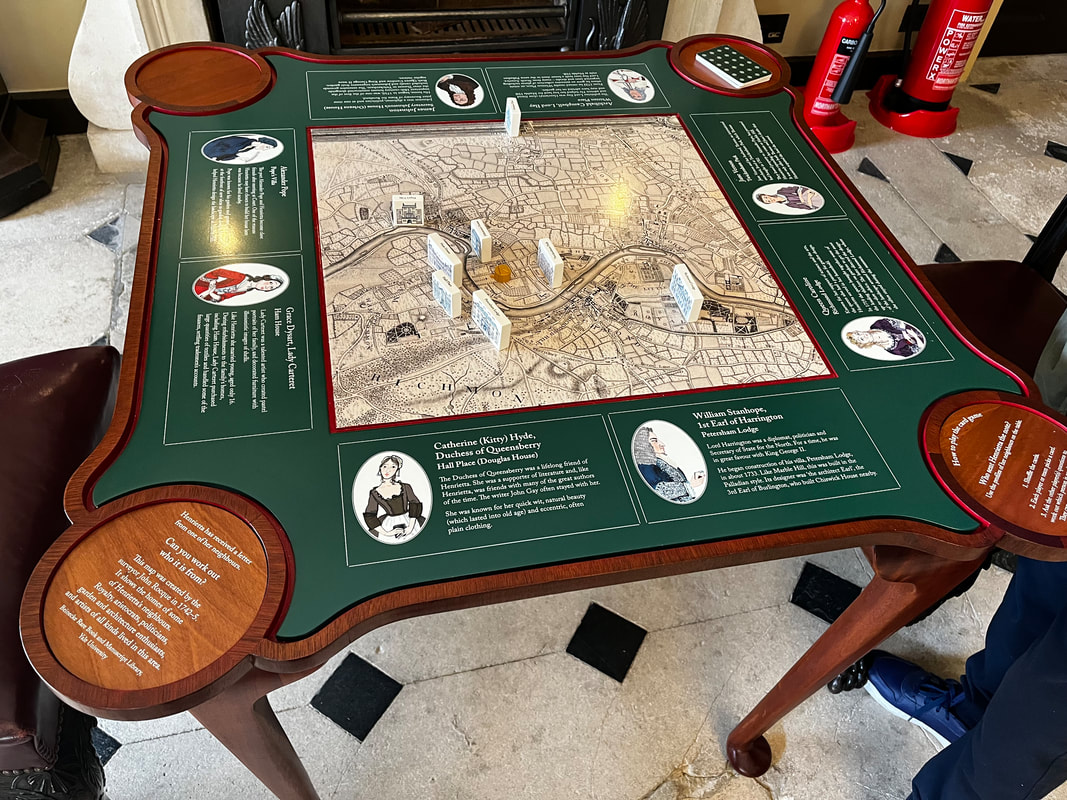
Above, left. the front door, leading toward the view of the Thames. Right, a closer view of the game table with sketches of some of the frequent players.
The House is often praised as the perfect Palladian villa, and was very influential in subsequent structures in Britain, the colonies, and the newly-established USA.
The House is often praised as the perfect Palladian villa, and was very influential in subsequent structures in Britain, the colonies, and the newly-established USA.
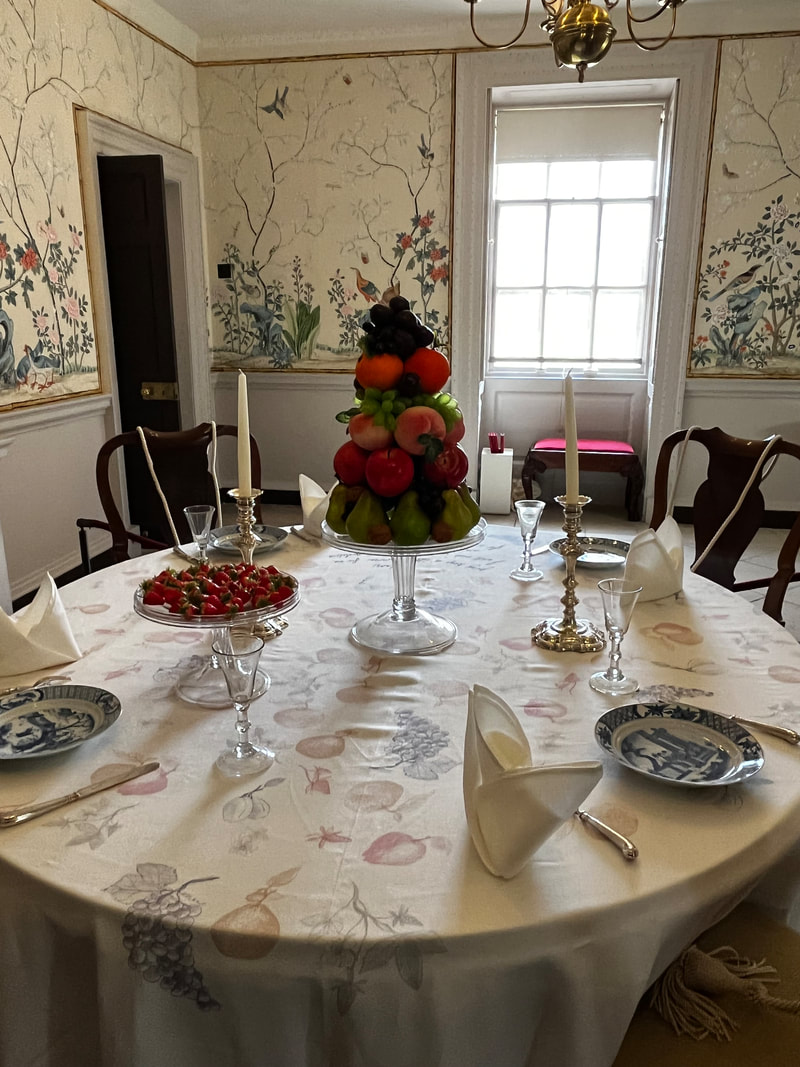
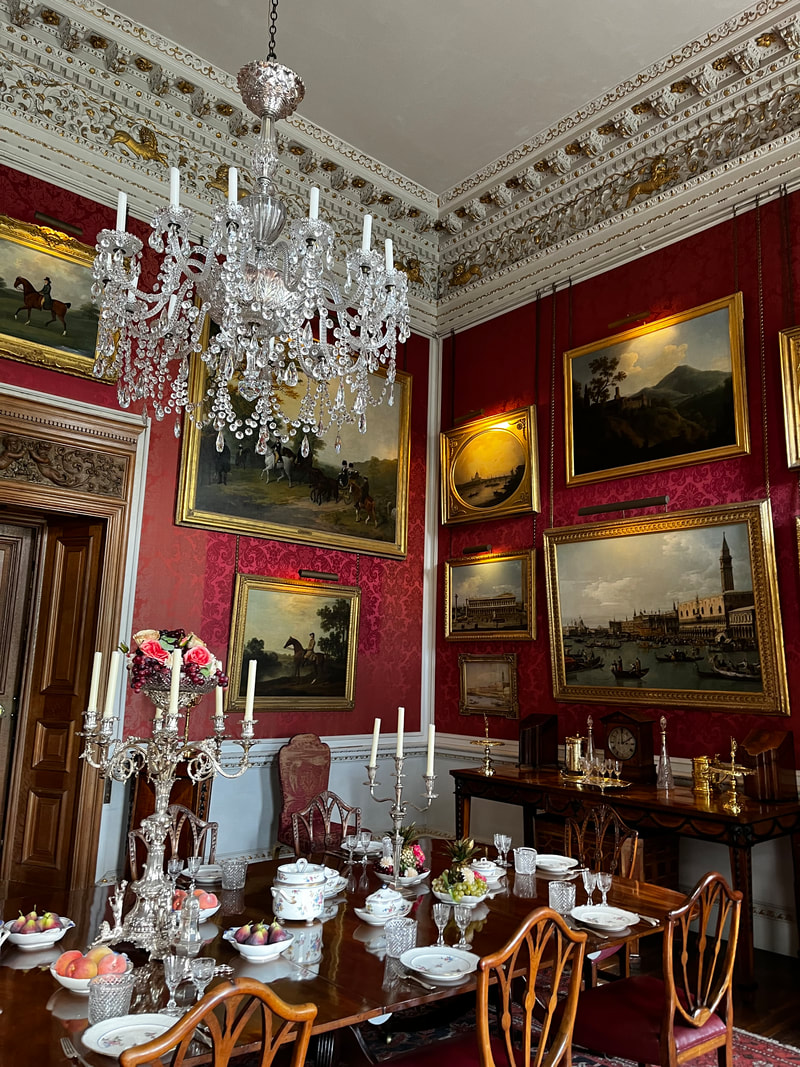
Below, the Dining Parlor. Henrietta was an admirer of the rage for Chinoserie design. The hand-painted wallpaper in this room, hung in 2006 by English Heritage, was carefully designed and executed by Chinese artists to resemble the description we have of the original, of which there is no trace.
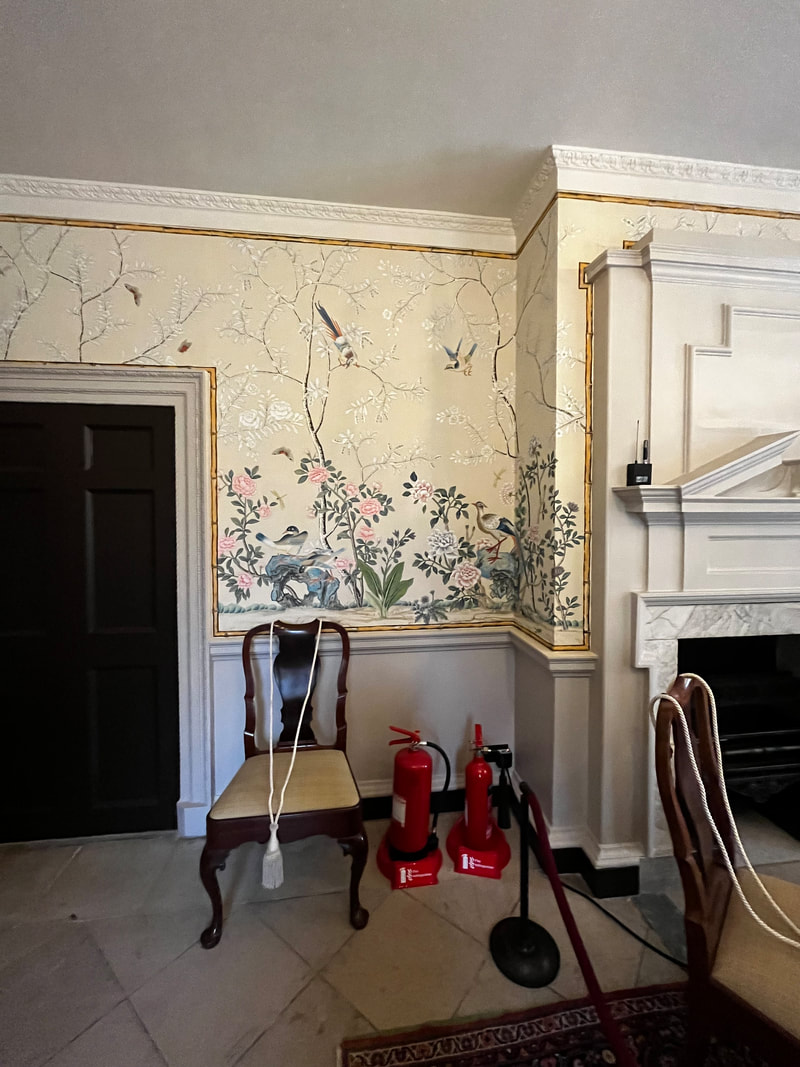
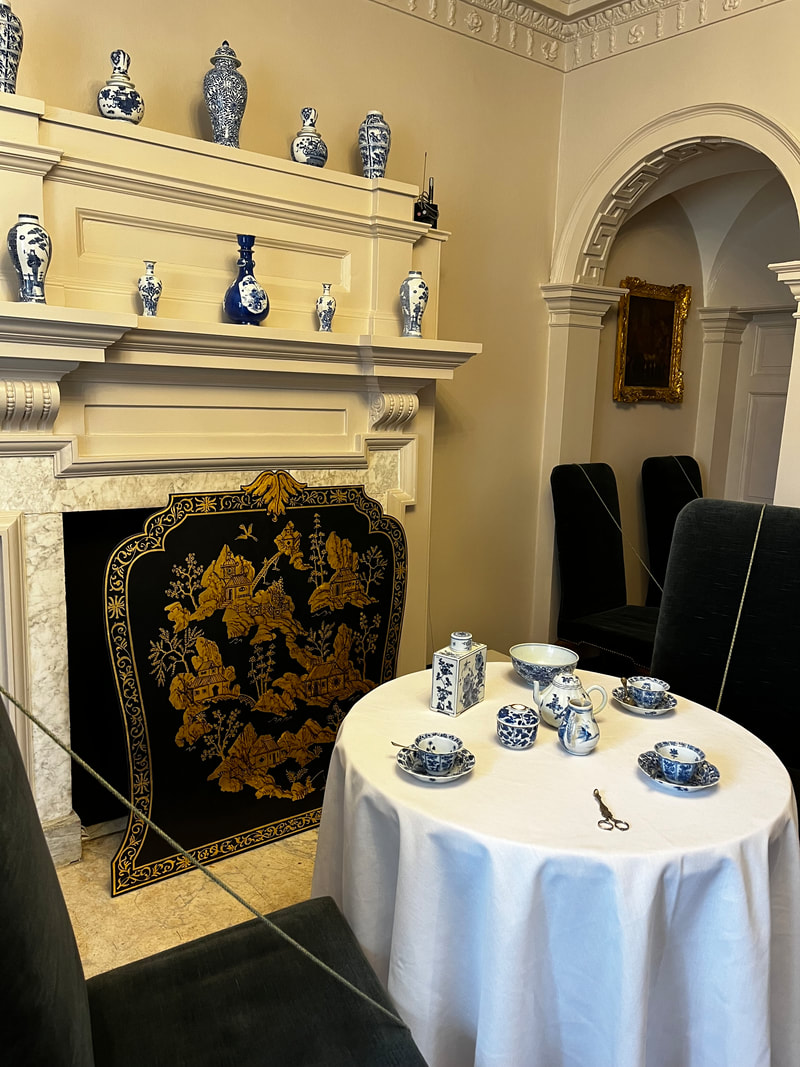
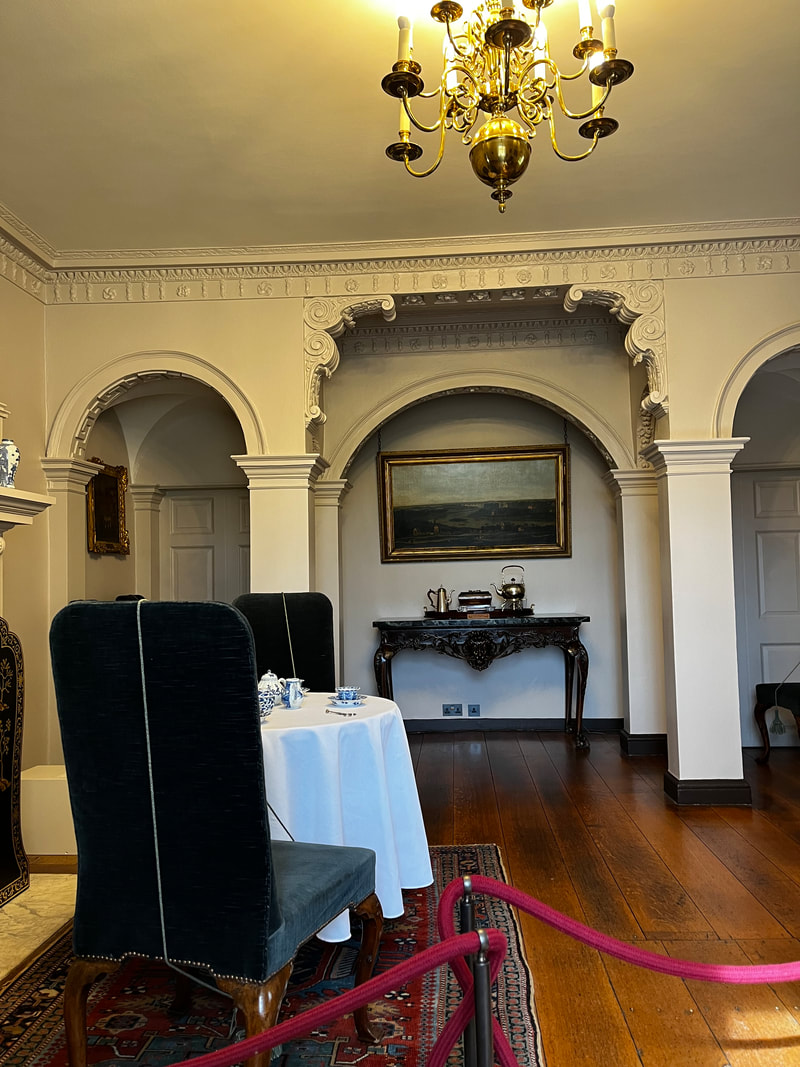
Above, left and right, the Breakfast Parlor.
The Palladian style, inspired by the designs of Italian Renaissance architect Andrea Palladio (1508-1580), is based on symmetry, careful proportions, and classical influences from Greece and Rome. Palladian ideals dominated British architecture for decades, even centuries.
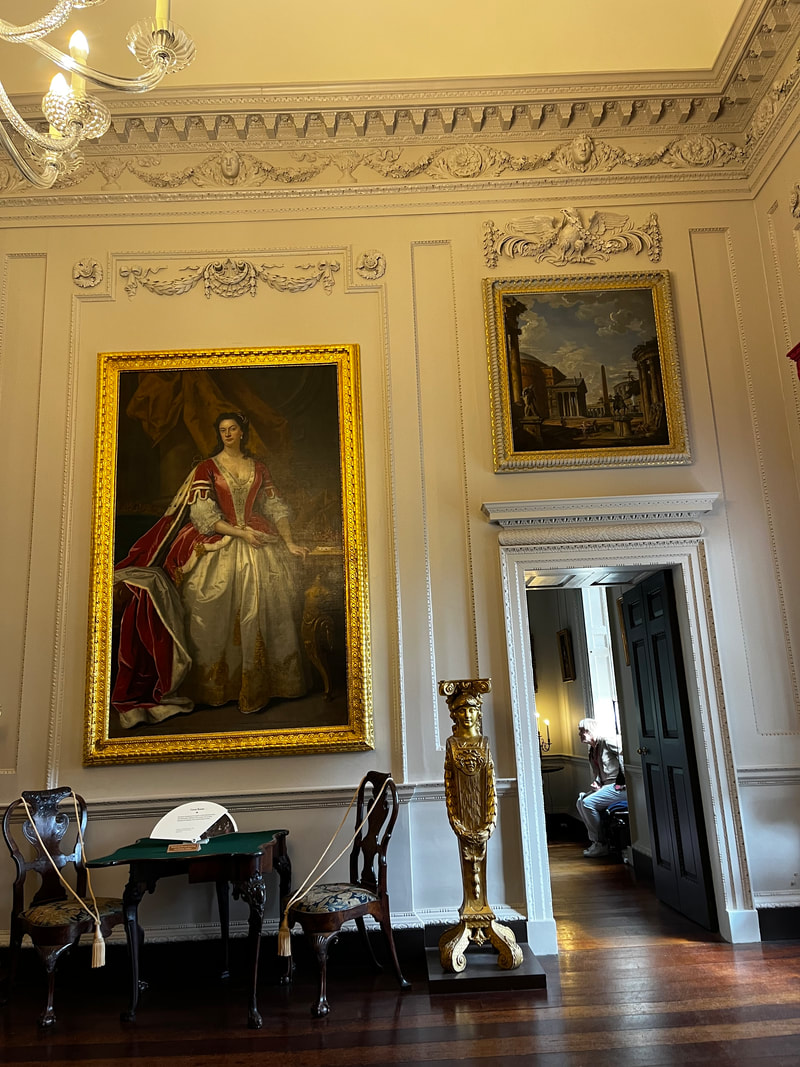
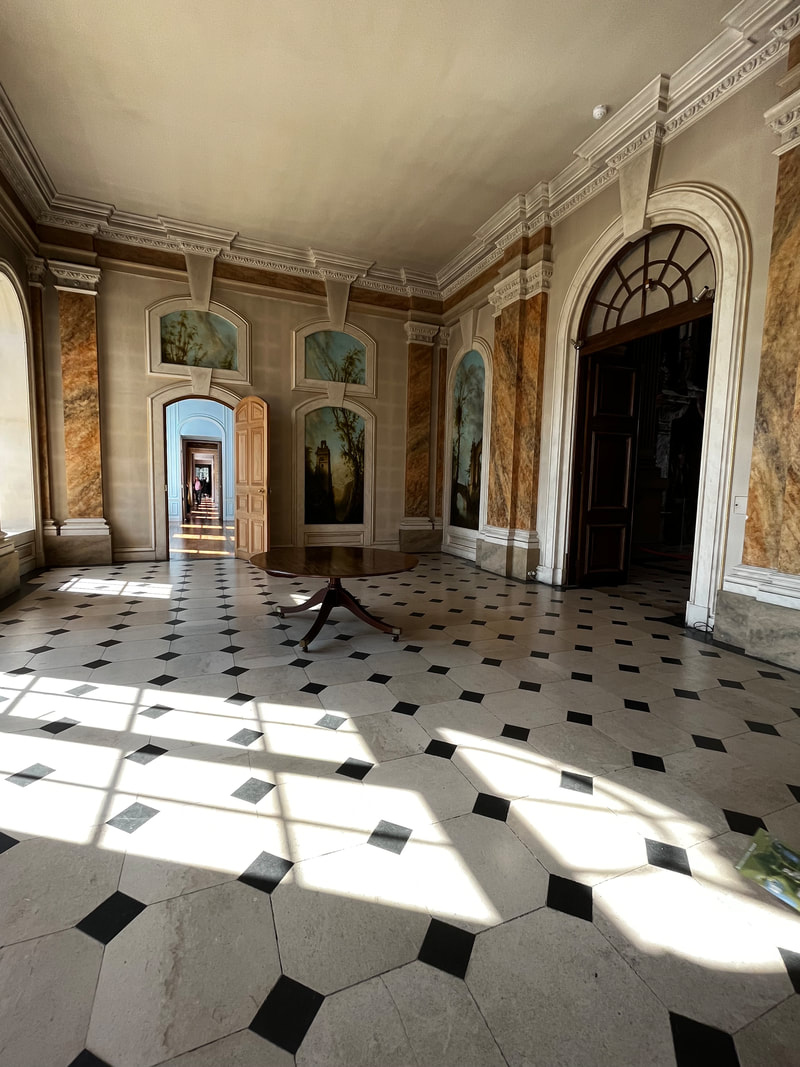
As often seen in these structures, the central room, the Great Hall at Marble Hill, below, is a cube.
If I understand the various accounts on the web both before and after the multi-year renovations completed in 2022, the portraits in the Great Room are contemporaries of Henrietta, Countess of Suffolk, brought to Marble Hill for exhibition recently. Originally, the Countess hung other works and five remaining capricci paintings by Giovanni Paolo Pannini. The imaginary Arcadian views of Italy were a very popular style in her time.
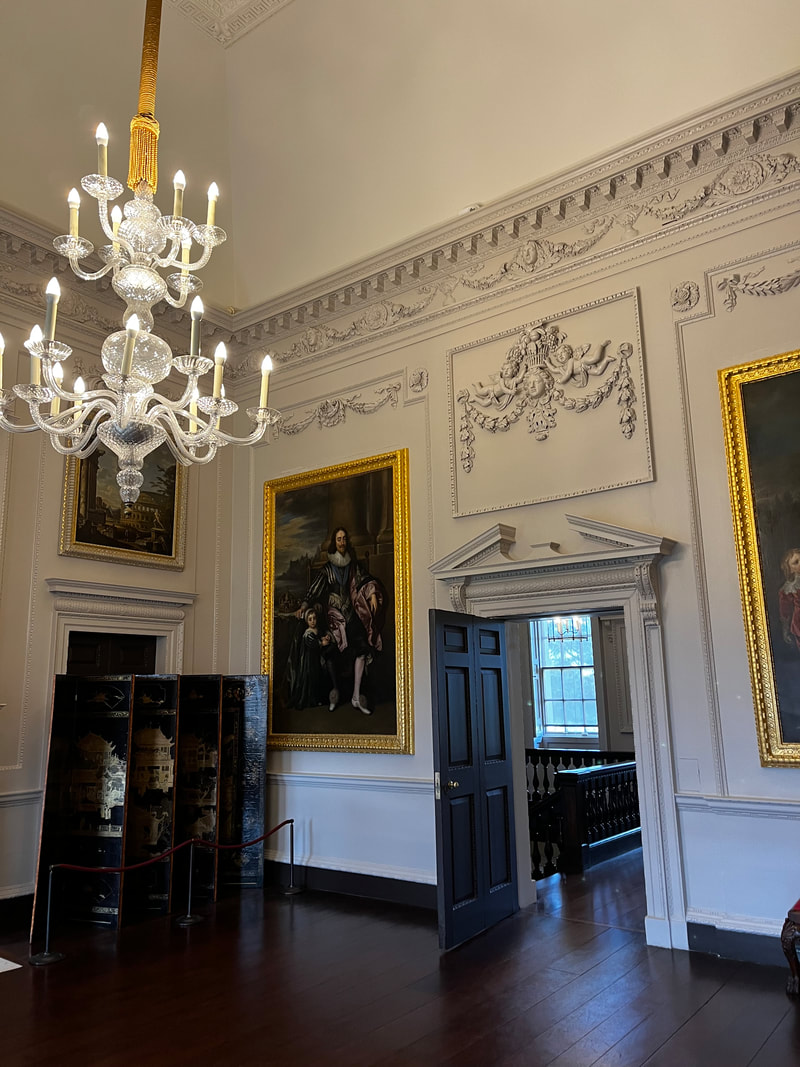
Below, left, a portrait of King Charles I with Prince Charles, 17th C., after Anthony Van Dyke, acquired for the space in 1965. Right, Elizabeth Compton, Countess of Northampton, by John Vanderbank, c. 1737, brought to Marble Hill in 1965; a Pannini capricccio hangs above the doorway.
The Palladian style, inspired by the designs of Italian Renaissance architect Andrea Palladio (1508-1580), is based on symmetry, careful proportions, and classical influences from Greece and Rome. Palladian ideals dominated British architecture for decades, even centuries.
As often seen in these structures, the central room, the Great Hall at Marble Hill, below, is a cube.
If I understand the various accounts on the web both before and after the multi-year renovations completed in 2022, the portraits in the Great Room are contemporaries of Henrietta, Countess of Suffolk, brought to Marble Hill for exhibition recently. Originally, the Countess hung other works and five remaining capricci paintings by Giovanni Paolo Pannini. The imaginary Arcadian views of Italy were a very popular style in her time.
Below, left, a portrait of King Charles I with Prince Charles, 17th C., after Anthony Van Dyke, acquired for the space in 1965. Right, Elizabeth Compton, Countess of Northampton, by John Vanderbank, c. 1737, brought to Marble Hill in 1965; a Pannini capricccio hangs above the doorway.

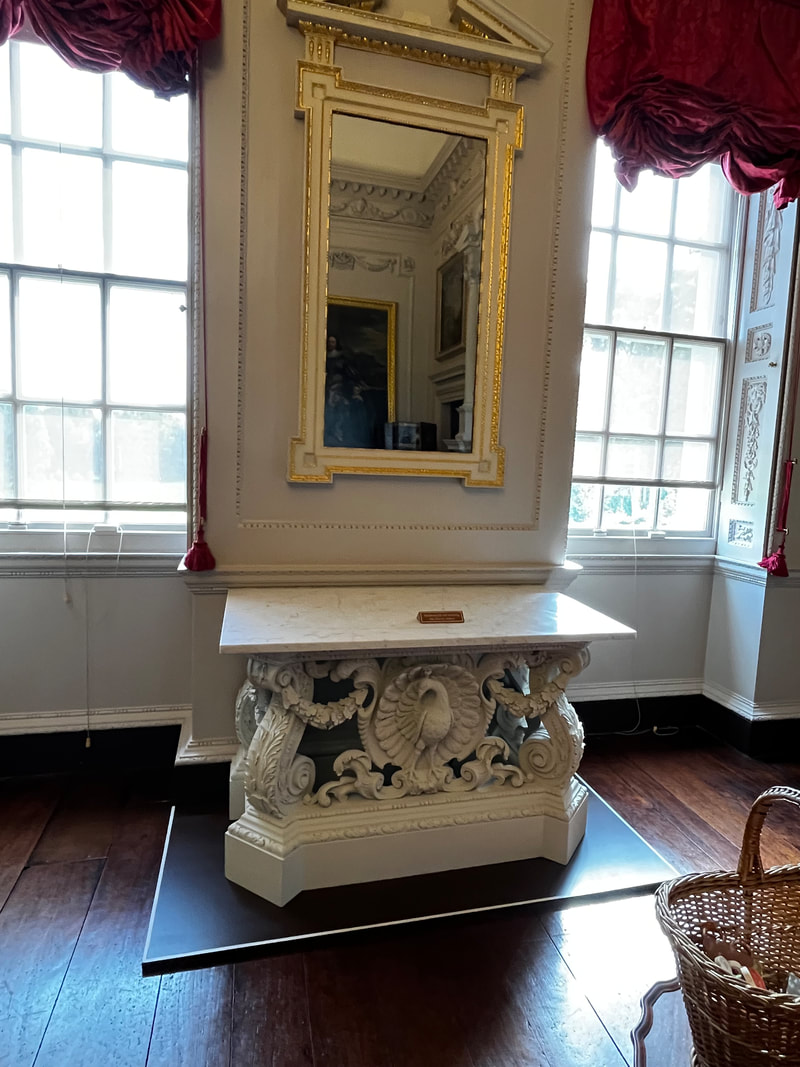
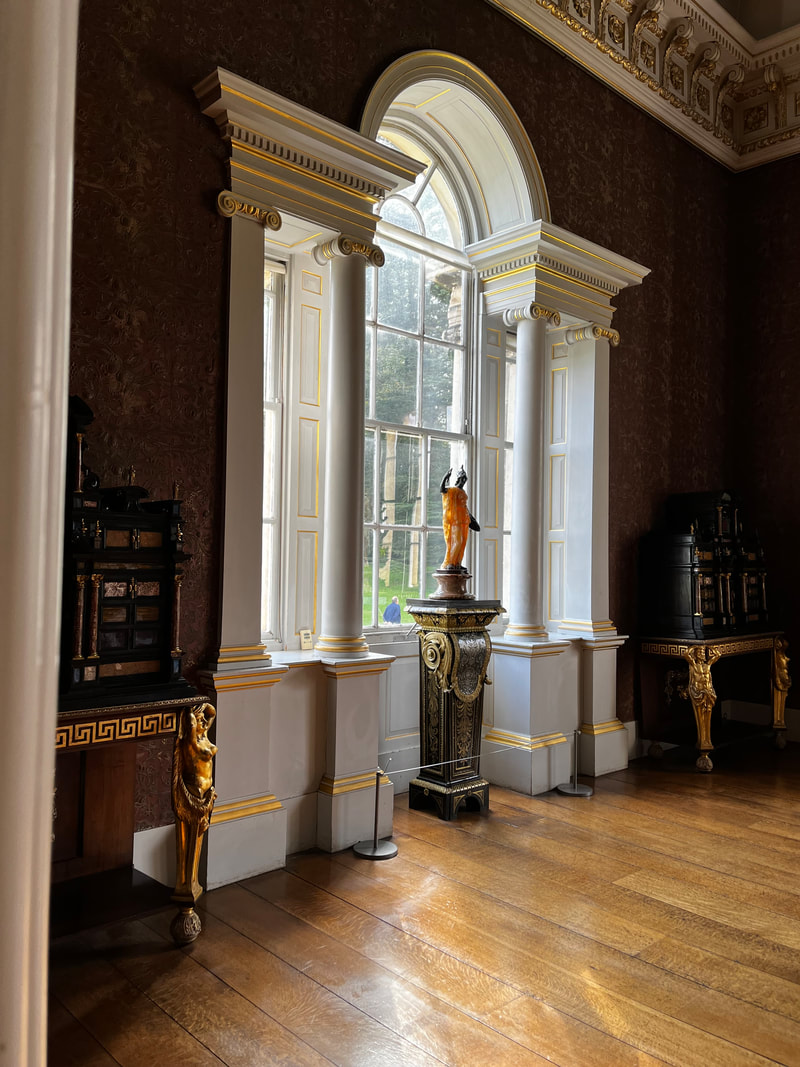
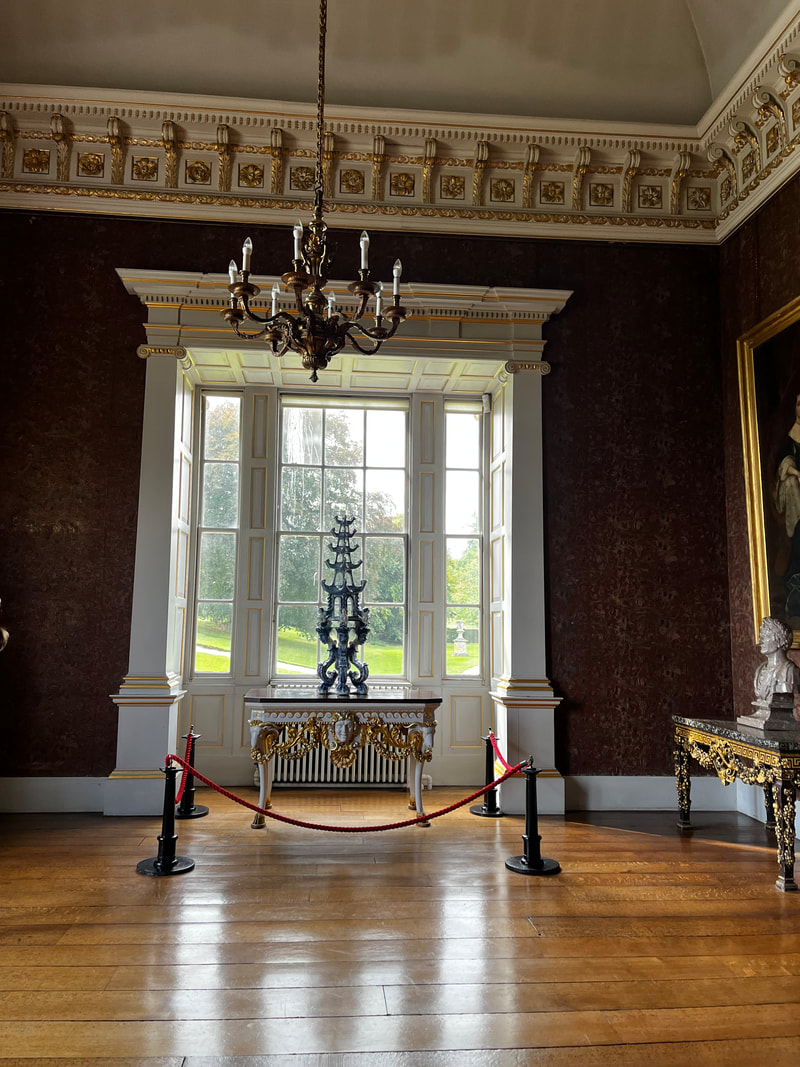
Above, beneath the three grand windows facing the Thames, one of the marble pier tables is attributed to William Kent. The other, a contemporary recreation is almost identical, with the bird's head turned the other way to preserve their symmetry.
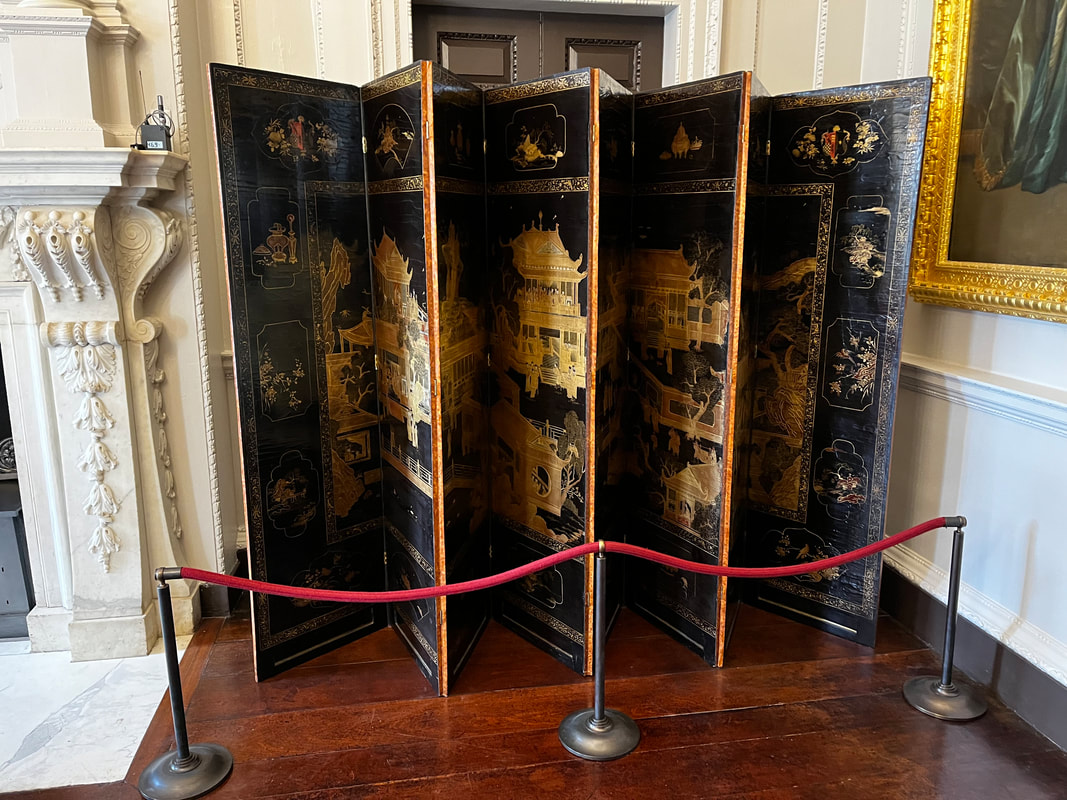
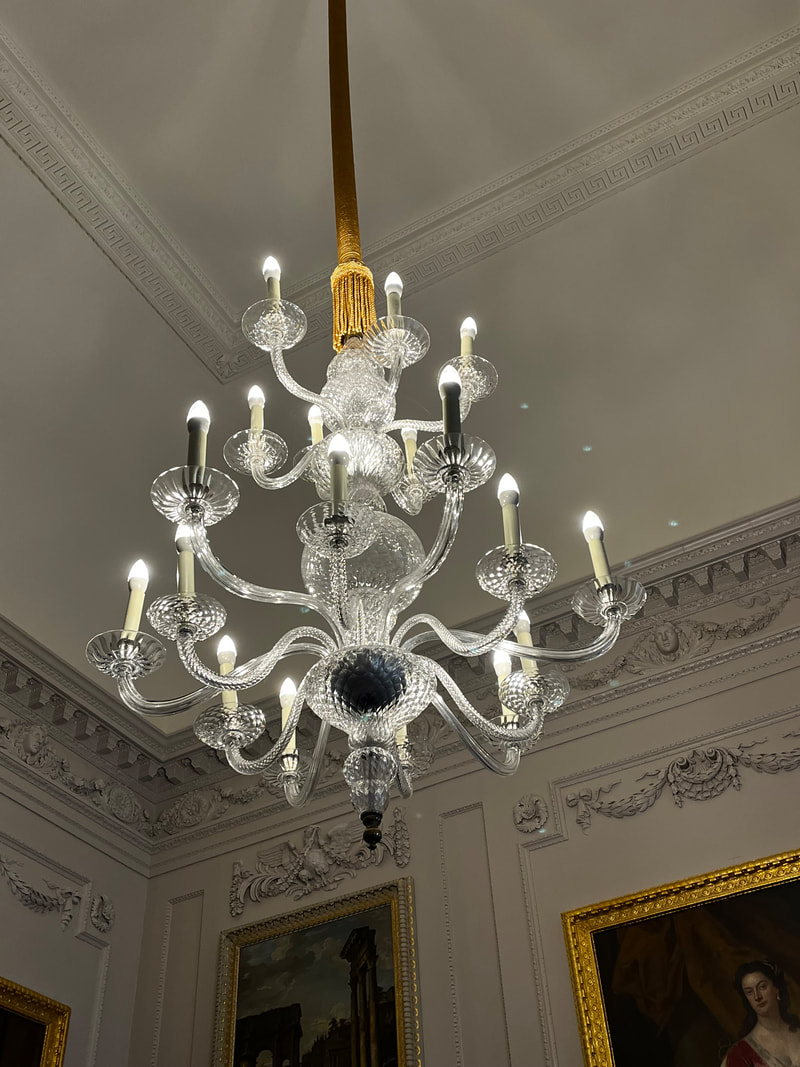
Below, left, a lacquer Chinese screen, one of several similar imported objects in Henrietta's collection; right, the now-electrified chandelier.
Below, left, a lacquer Chinese screen, one of several similar imported objects in Henrietta's collection; right, the now-electrified chandelier.
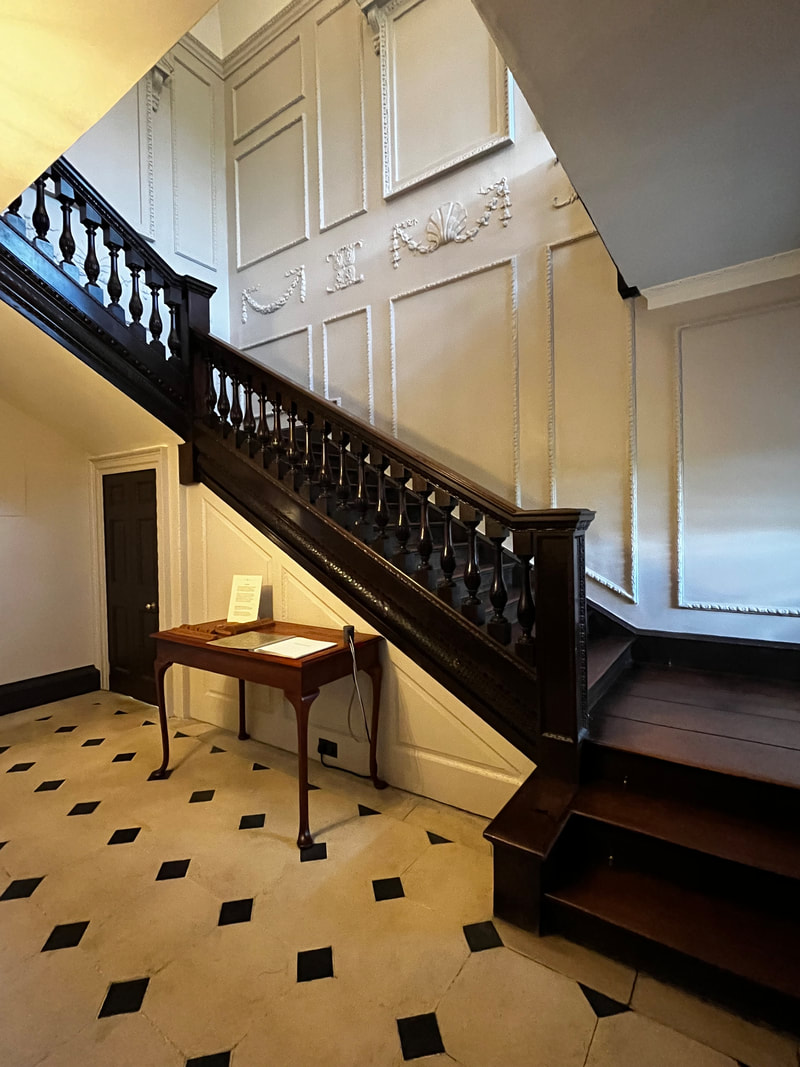
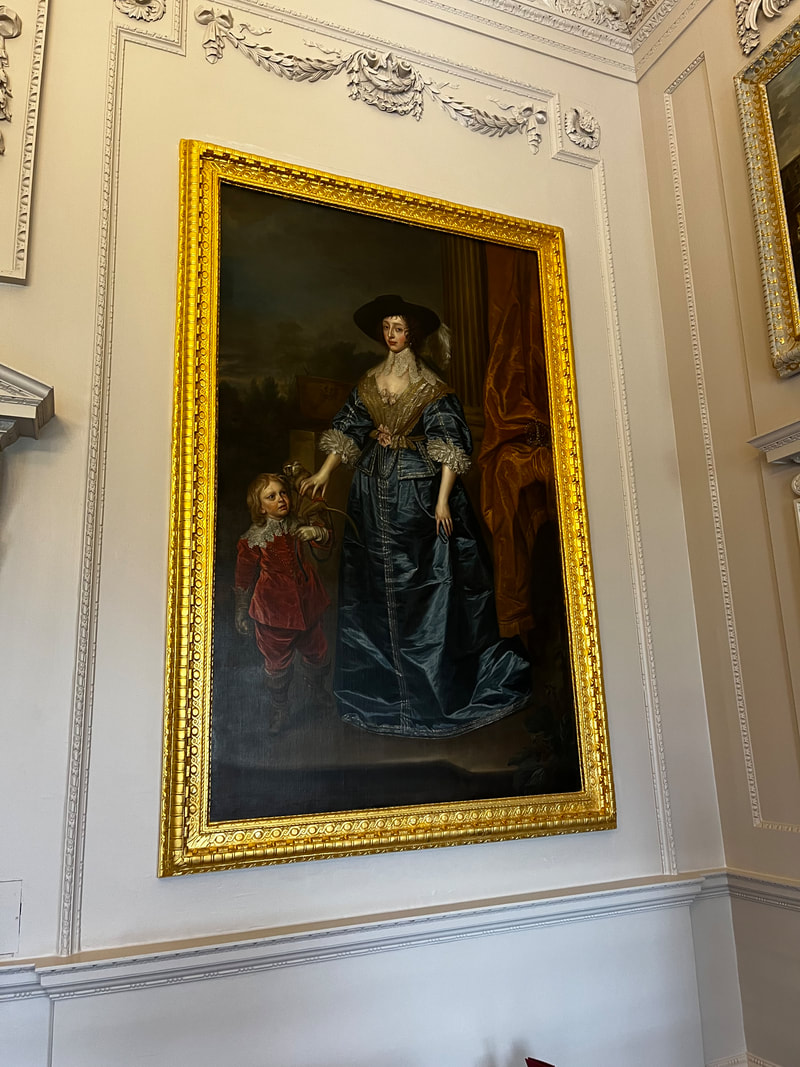
Above, left: the mahogany staircase from the Ground Floor to First Floor (Piano Nobile); right, after Anthony van Dyke; portrait of Queen Henrietta Maria and Sir Jeffrey Hudson, c. 1633.
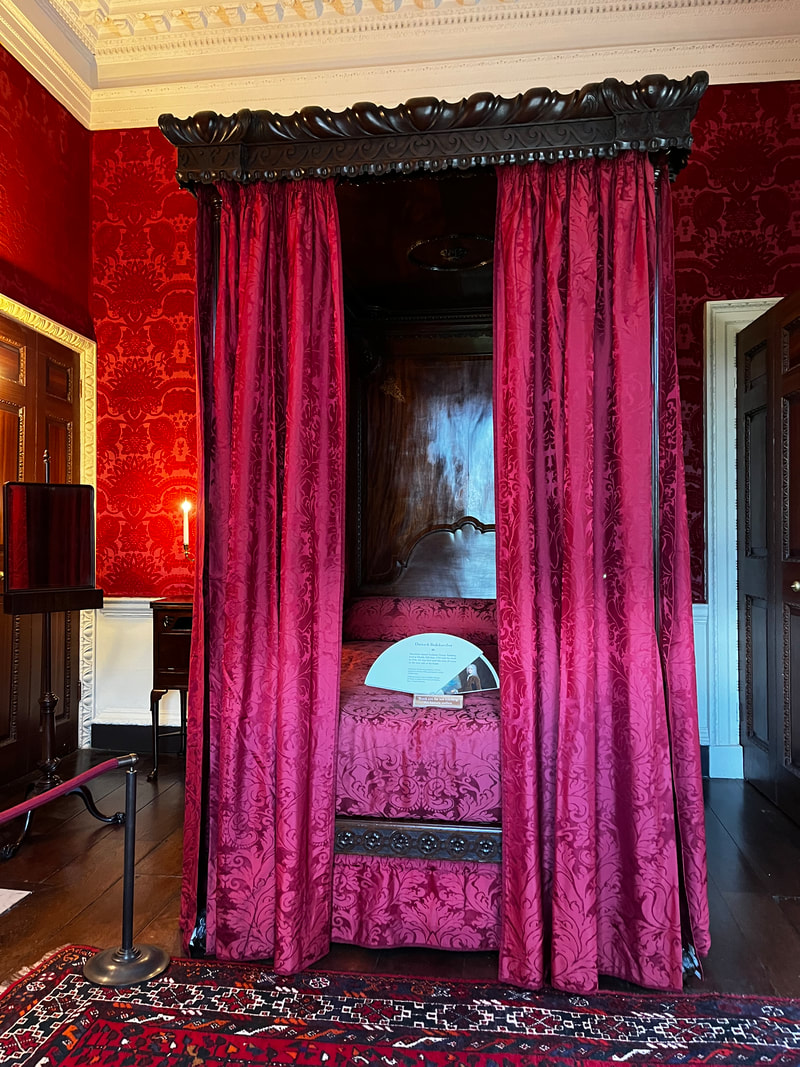
Below, left and right, Red Bedroom, also known as the Damask Room.
Below, left and right, Red Bedroom, also known as the Damask Room.


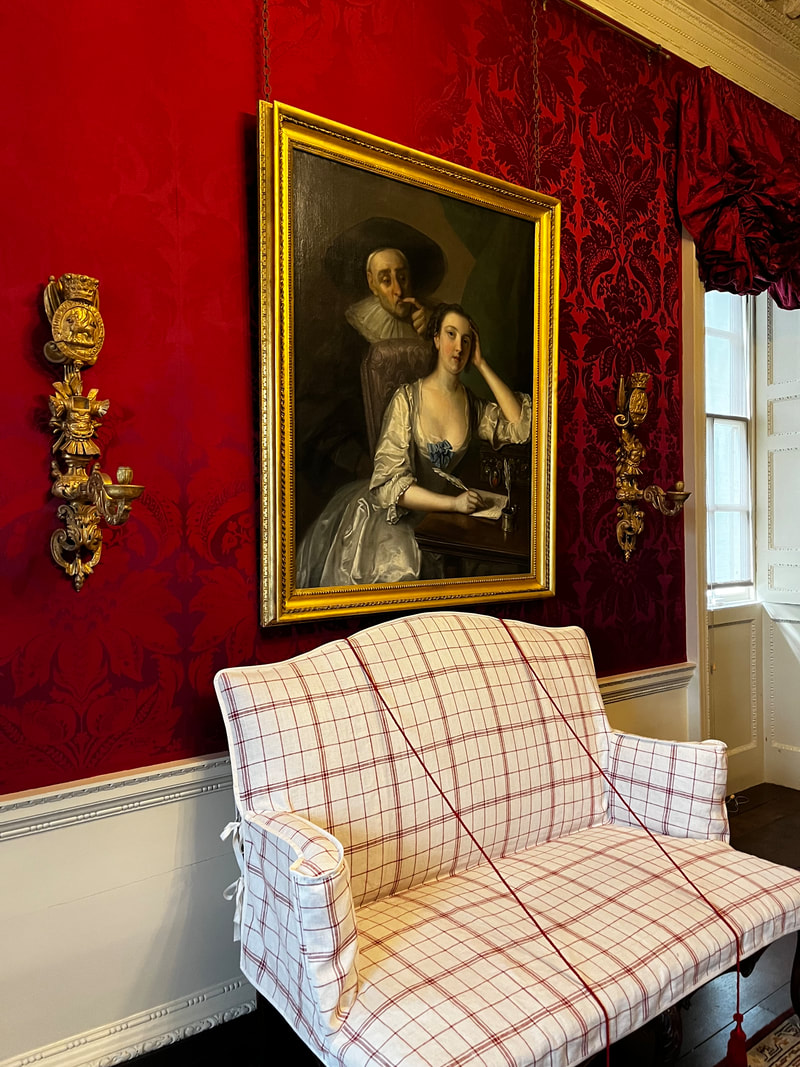
Above, left, the writing room, also known as the Dressing Room, where Henrietta Howard spent much of her time. Left, I admired the subtle plaid upholstery. The painting is The Letter Writer by artist Philippe Mercier (1689-1760).
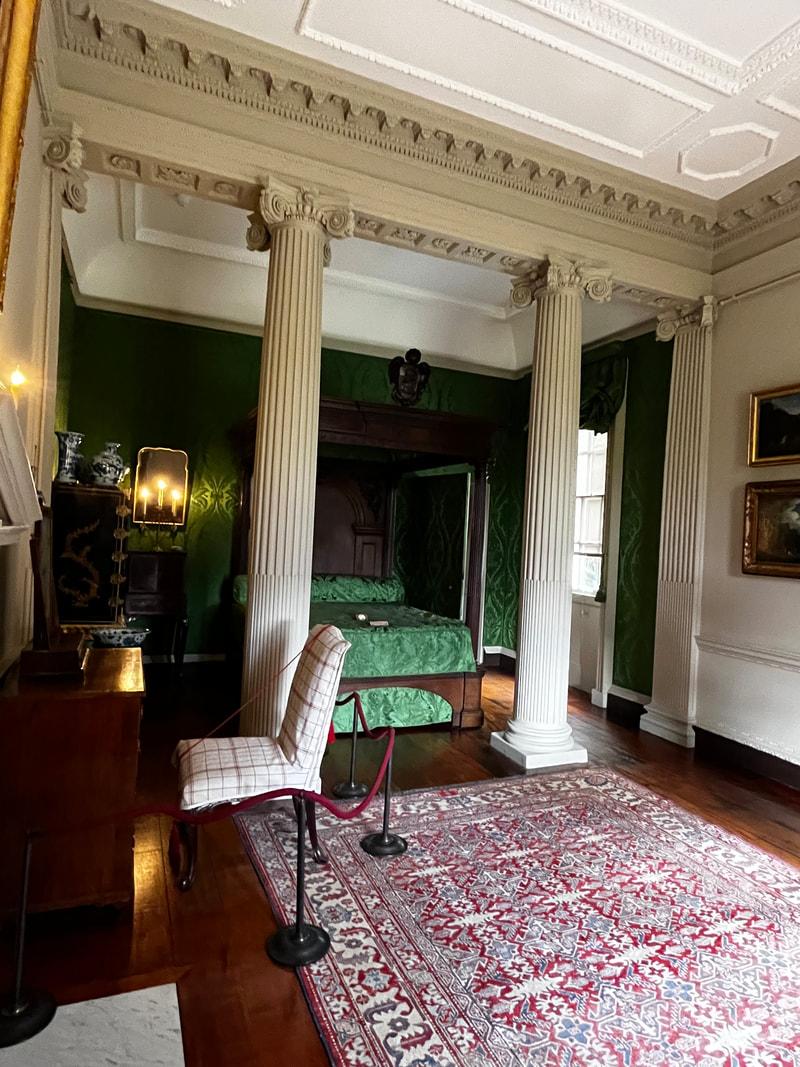
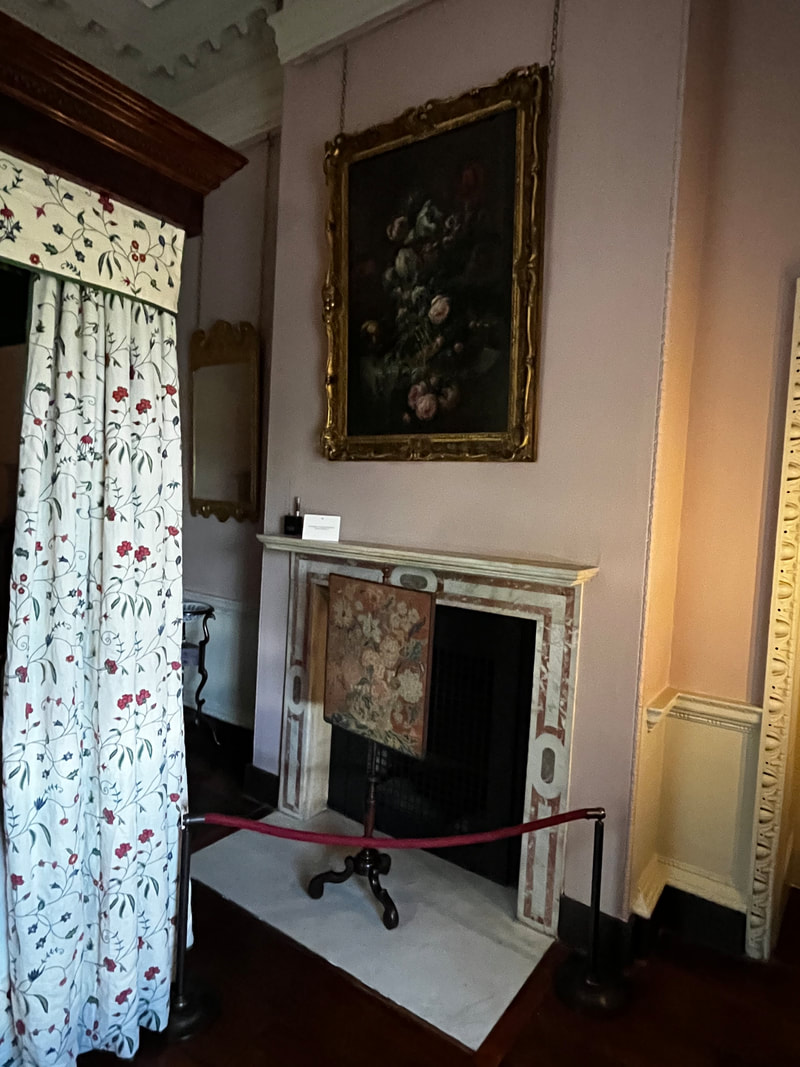
Below, left, Henrietta Howard's bedchamber. Right, the bedchamber of great niece Henrietta Hotham (c.1750-1816), who lived at Marble Hill House and inherited the property after the death of the Countess of Suffolk in 1767.
Below, left, Henrietta Howard's bedchamber. Right, the bedchamber of great niece Henrietta Hotham (c.1750-1816), who lived at Marble Hill House and inherited the property after the death of the Countess of Suffolk in 1767.

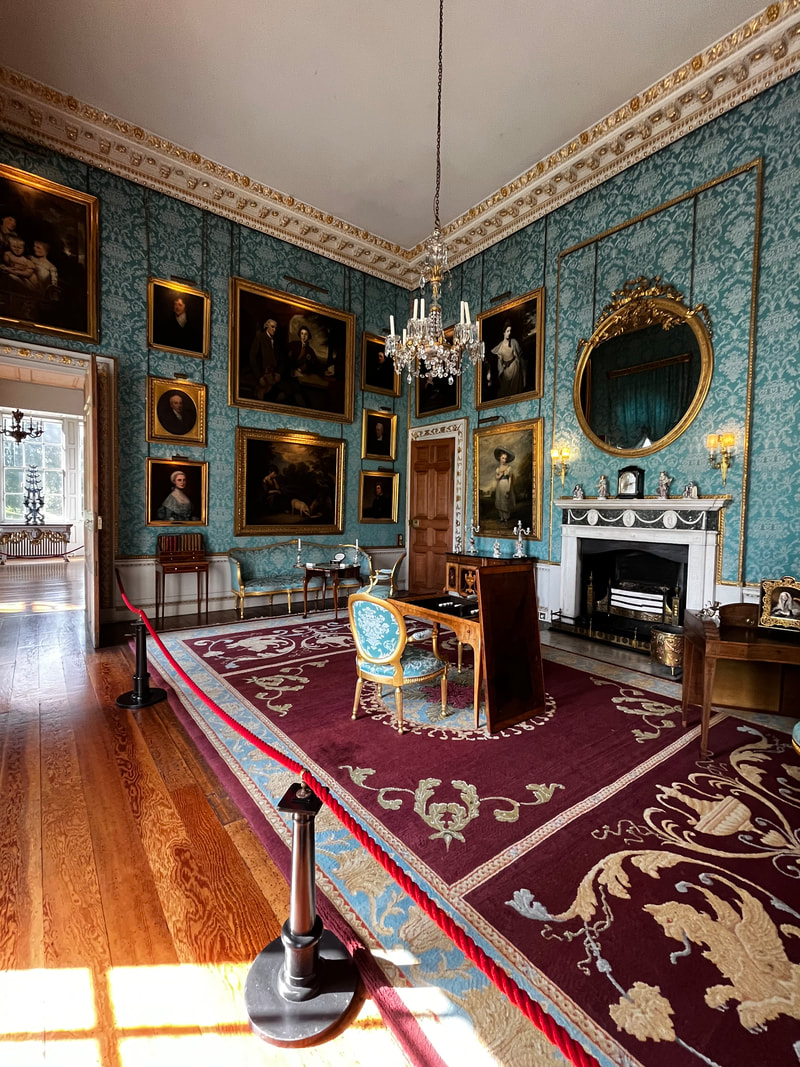
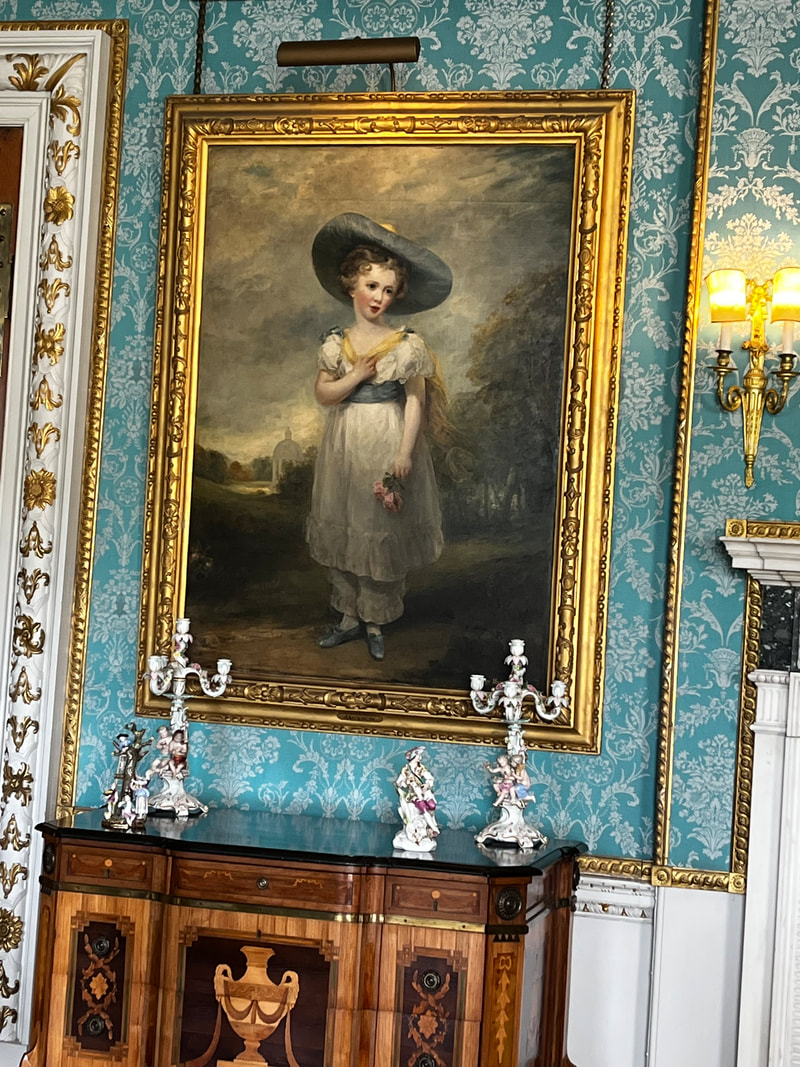
Above, left, the Great Room. Right, Maria Fitzherbert (1756-1837), 1788, by Sir Joshua Reynolds
(1723-92).
After Henrietta Howard's death in 1767, Marble Hill was eventually inherited by her great niece Henrietta Hotham. For several years up to 1796, it was the home of another mistress of another Prince of Wales. Mrs. Fitzherbert married the Prince of Wales, later George IV, in 1785 in an illegal ceremony (that is, unapproved by the monarch, George III).
(1723-92).
After Henrietta Howard's death in 1767, Marble Hill was eventually inherited by her great niece Henrietta Hotham. For several years up to 1796, it was the home of another mistress of another Prince of Wales. Mrs. Fitzherbert married the Prince of Wales, later George IV, in 1785 in an illegal ceremony (that is, unapproved by the monarch, George III).
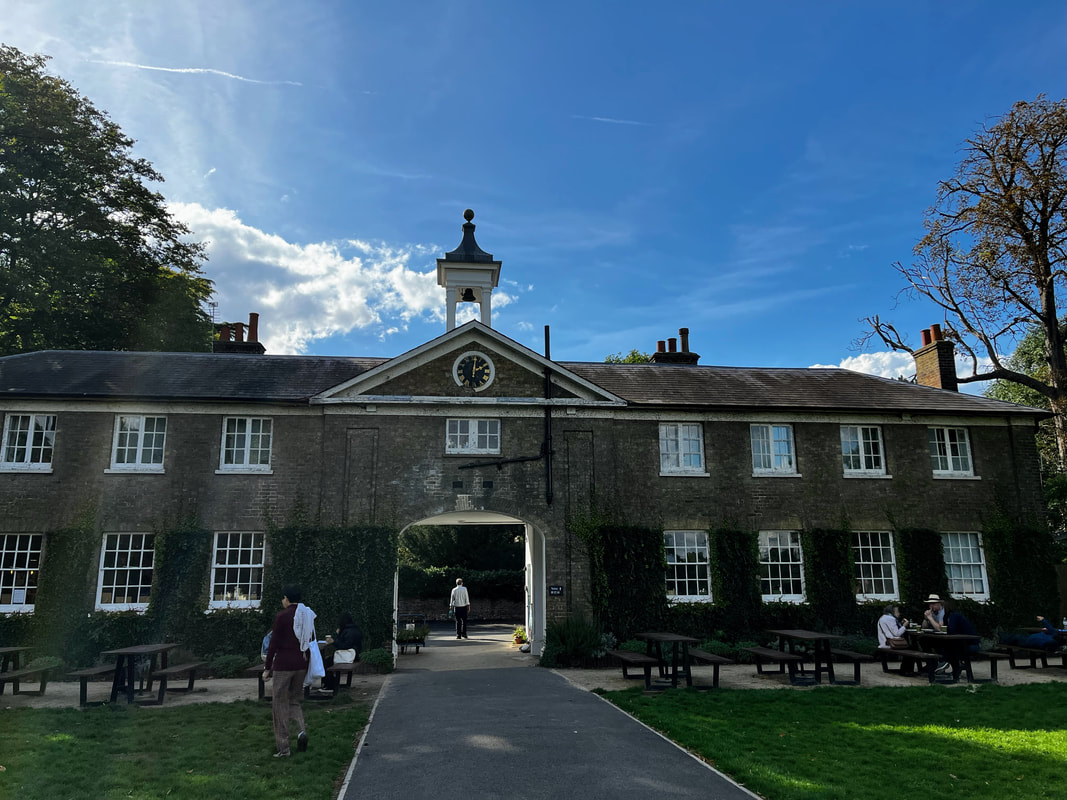
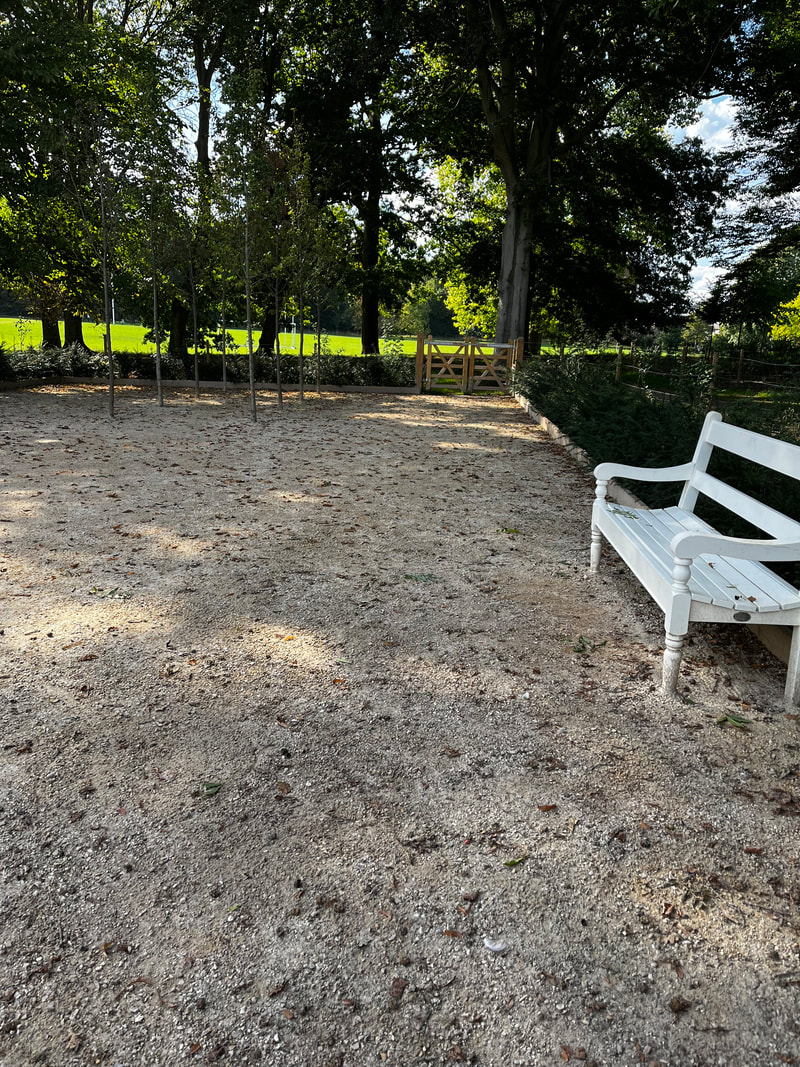
Above, left, a stable block now a cafe and offices. Right, graveled area for playing games on the grounds.
For many years, Marble Hill was rented out and fell into disrepair. It was saved by a national drive to preserve the view from Richmond Hill when development threatened. Parliament passed an act in 1902 to preserve the view of the Thames winding among woods and meadows in Surrey. Marble Hill thus became a park and playing fields. Participants in planning The recent renovations included groups of women recovering from abuse and those afflicted by hearing difficulties, to remember the trials Henrietta Howard, Lady Suffolk, endured.
This concludes my series of reports on visiting England in September, 2022. More adventures are about to begin. Stay tuned. On my Bucket List: Hartwell House, Buckinghamshire.
For many years, Marble Hill was rented out and fell into disrepair. It was saved by a national drive to preserve the view from Richmond Hill when development threatened. Parliament passed an act in 1902 to preserve the view of the Thames winding among woods and meadows in Surrey. Marble Hill thus became a park and playing fields. Participants in planning The recent renovations included groups of women recovering from abuse and those afflicted by hearing difficulties, to remember the trials Henrietta Howard, Lady Suffolk, endured.
This concludes my series of reports on visiting England in September, 2022. More adventures are about to begin. Stay tuned. On my Bucket List: Hartwell House, Buckinghamshire.
















 RSS Feed